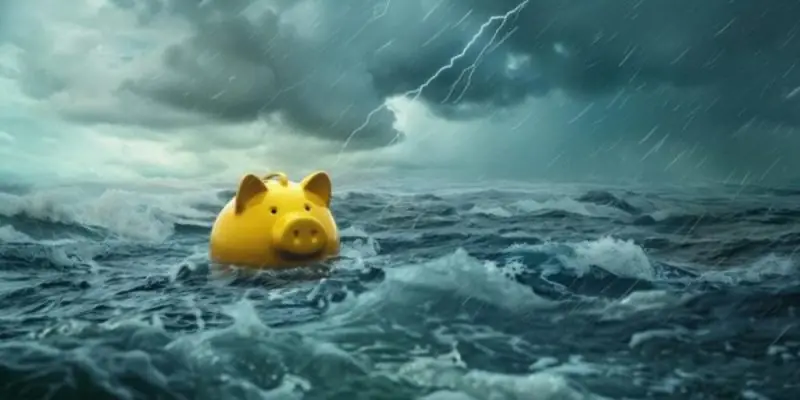
From hurricanes to wildfires, natural disasters are no longer rare events. They’re increasingly common, and they’re reshaping the financial map. Although stronger regulations and better-capitalized banks have helped protect the global economy since 2008, growing threats tied to climate change are starting to create cracks. And those cracks, experts warn, could deepen into a financial chasm far more destructive than the last crisis.
A Crisis Remembered
September 15, 2008, marked a turning point. The fall of Lehman Brothers sent shockwaves through the world economy. Trillions in wealth vanished. Homes were lost. Jobs disappeared. And the housing market—once a symbol of financial security—turned into a source of widespread panic.
That crash taught hard lessons about overleveraged banking systems and toxic mortgage-backed securities. Yet today, some fear a different kind of threat is building—one tied not to financial engineering but to rising global temperatures.
Real Estate and the Rising Climate Tide
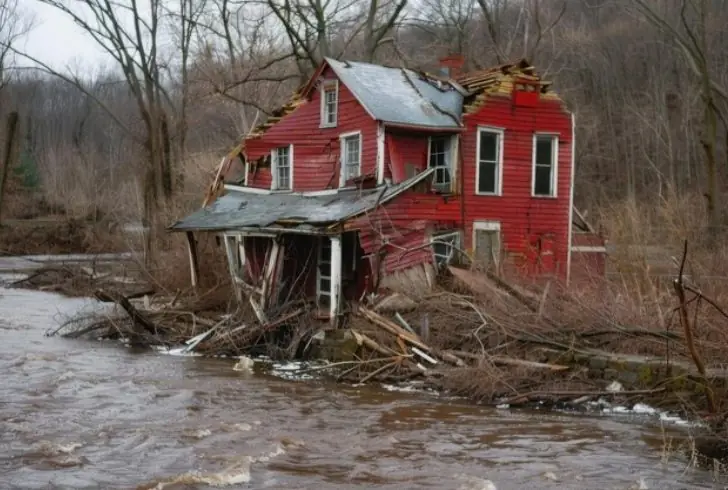
Climate-related disasters are becoming more frequent and expensive. Wildfires, hurricanes, floods, and heatwaves are causing billions in damages annually. As these incidents increase in frequency, they put pressure on insurance companies and cause repercussions throughout the financial industry.
Insurance premiums have soared in disaster-prone states like California, Florida, and Louisiana. At the same time, major insurers are scaling back or leaving certain markets entirely. As coverage disappears, mortgages become harder to obtain—because lenders won’t issue loans on uninsured properties. That cuts buyers out of the market and starts a chain reaction: property values fall, loans go unpaid, and financial institutions face mounting losses.
Climate as a Systemic Financial Risk
In a January statement, the Financial Stability Board flagged growing insurance inaccessibility as a potential systemic shock. Federal Reserve Chair Jerome Powell echoed the concern, warning of future regions where basic banking services might vanish due to climate-related pullbacks. Even Warren Buffett has highlighted how rising storm damage is forcing insurers to boost costs, describing the development as “climate change announcing its arrival.”
The most sobering words came from Günther Thallinger of Allianz, who said insurers may reach a breaking point where they can no longer operate. If that happens, entire regions could lose economic value and disappear from the financial ledger.
The Domino Effect
Here’s how a climate-fueled financial crisis could unfold:
1. Insurance exits expand: Not just California or Florida, but other states face insurer exits. Rates spike. Coverage shrinks.
2. Banks follow: Without insurance, no mortgages. Without mortgages, banks pull out.
3. Property values sink: Homes once viewed as family wealth begin to lose value.
4. Defaults increase: Mortgage delinquencies and foreclosures rise. Households fall underwater.
5. Markets react: Real estate, long seen as a stable asset class, begins to wobble.
6. Global impact grows: Financial institutions abroad face similar pressures—from Europe to Australia.
Each step builds on the last. And unlike past crises, this one stems from something physical, not financial. There’s no quick fix for rising seas or worsening wildfires.
Divided Opinions on the Severity
Not everyone agrees a meltdown is inevitable. Some, like Federal Reserve Governor Christopher Waller, argue climate change—while real—doesn’t pose a serious threat to large banks. He believes real estate shocks can be absorbed, just like in post-industrial cities such as Detroit.
And indeed, traditional stress tests suggest big banks can weather major housing losses. Still, others worry that these models downplay the risk—especially when they fail to account for climate tipping points, like irreversible ice sheet loss or unlivable heatwaves.
A Gradual Breakdown or a Sudden Shock?
Unlike the 2008 collapse, where a single event triggered widespread panic, the coming risks may unfold slowly. Former California Insurance Commissioner Dave Jones believes the crisis may arrive not with a bang but a steady crumble: more insurer bankruptcies, less affordable coverage, more defaults, and eventually, frozen credit markets.
Although he doesn’t rule out an abrupt collapse, he stresses the bigger danger lies in slow, persistent erosion.
A Crisis Unlike Any Other
What makes this scenario particularly troubling is its permanence. Financial markets are cyclical. Most recover. But climate shocks don’t reverse. If an asset becomes uninsurable due to wildfires or flooding, its value may never rebound.
Ben Keys, professor at the University of Pennsylvania, warns that climate-driven losses differ from other downturns. “You don’t need a massive shock if it’s permanent,” he notes. Even modest, lasting changes in risk can drag down asset prices across entire regions.
The Transition Risk
While physical risks grow, so do transition risks—the economic shifts caused by changing climate policies. Investors who poured money into fossil fuel projects now face the possibility of stranded assets as regulations tighten.
That’s the basis of the “carbon bubble” theory, popularized by London-based think tank Carbon Tracker. In 2011, they warned that fossil fuel companies owned far more carbon reserves than global climate goals could safely allow. If regulations ever aligned with these goals, it could wipe trillions in value.
In a 2015 speech, former Bank of England Governor Mark Carney supported the proposal, calling for businesses to reveal their carbon exposure to prevent a “climate Minsky moment”—a catastrophic collapse.
Central Banks Join the Fight
Carney’s warning sparked global action. Global central banks established the Network for Greening the Financial System in 2017. Members like the ECB and Federal Reserve began stress-testing banks for climate resilience.
These assessments have evolved but remain incomplete. Critics argue current models ignore worst-case scenarios, like rapid sea-level rise or runaway Arctic warming. Without factoring in these risks, results remain too optimistic.
The Trump Shift
In the US, the arrival of a new administration brought swift changes. The administration of President Trump acted rapidly to limit data collection from organizations like FEMA and NOAA, eliminate climate laws, and withdraw from international accords.
In 2024, the Federal Insurance Office released a major report showing that insurance was becoming less available and more expensive in climate-vulnerable regions. The data was troubling: those in high-risk areas paid 82% more than others. Soon after, the office faced calls for elimination, with critics accusing it of exaggerating climate risks.
A Surge in Disasters Reframes the Conversation
While politics shift, the disasters haven’t slowed. Wildfires in California, floods in China, typhoons in Asia, and deadly heat waves across three continents have become commonplace. In March, Japan and South Korea faced some of the worst wildfires in decades. By June, extreme heat gripped major cities across Europe, the US, and Asia.
These events have pushed finance professionals to reconsider old assumptions. Patrick Bolton, a finance professor and author of a major central banking climate study, said recent events show physical climate threats are now a clear and present danger.
What Financial Institutions Are Saying
Banks and insurers are shifting their strategies. Some are pulling out of high-risk regions entirely. Others are demanding better data and pushing for updated stress test models. Still, many worry it’s too little, too late.
Lord Adair Turner, a former UK financial regulator, said the growing severity of extreme weather could destabilize property markets—a key pillar of financial systems globally. If homes can’t be insured, lenders retreat. And if values fall, so does consumer spending and creditworthiness.
Will the System Hold?
For now, financial markets remain relatively stable. But experts are watching closely. The next crisis may not begin with a collapsing bank but with an uninsurable house. The real challenge? These risks are no longer theoretical. They’re already reshaping the economy—region by region, disaster by disaster.
Climate risks no longer sit on the sidelines of financial planning. As threats accelerate, institutions must adapt or face cascading consequences. Markets, policies, and investors need to prepare now because this time, the warning signs are already here.